Showing posts with label Hamlet. Show all posts

Thursday, September 15, 2016

Women on Shakespeare: Patricia McGregor on directing Hamlet

Since most Shakespearean casts are male-heavy and even male-only, coverage tends to focus on men who create the work. Let's balance that out! This is the second season of my interview series, Women on Shakespeare. I'm talking with the women who produce and perform Shakespeare and related work in New York City.

Twice every season, the Public Theater's Mobile Unit tours NYC neighborhoods with stagings of classic plays. The company is about to conclude its all-boro tour of Hamlet with a brief run at its home on Lafayette Street. Half of the sixteen artists credited are women, including three actors, the fight choreographer, and the director, Patricia McGregor. Earlier this week, I emailed with the show's Ophelia, and now I'm thrilled to listen to Ms. McGregor.

-----

Let’s put gender aside for a moment, and just talk Hamlet. What have you found most fascinating about the play?

What I found most fascinating was tracking how the revelation of injustice, in this case the murder of Hamlet's father, is the inciting incident that transforms a grieving young man who would rather shun public life into a man who sees the corrupt cracks in a whole system and is hell-bent on revenge. I find the soliloquies where Hamlet lets the audience into a very intimate debate on what to do next and reveals his rage, vulnerability, and confusion to be very moving and timely. This is especially true in many of the places the Mobile tour travels where folks in the audience are often wrestling with how to seek justice in an unjust world.

What knots did the playwright leave for you and your company to untangle?

Shakespeare left us to untangle the steps in [Hamlet's] transformation and the moments when he, intentionally or not, inflicts his own violence in the name of avenging a murder. There is also a style and technical challenge to untangle which is how to honor both the comedy and the tragedy in the play. We wanted to have the extremes of both be truthfully alive in the production. I was interested in how this production could be an examination, a warning and a call to action. How could we marry what is fundamental to the play with what seems urgent in our times so that the production can sit on a nerve.

Chukwudi Iwuji as Hamlet

Did you have preconceptions about Hamlet that got overturned in the rehearsal process?

Oskar Eustis recently came to a performance and told the actors that this production felt like a thriller. The rehearsal process overturned a preconception of just how fast and forward-footed we could make this piece while still honoring the moments of Hamlet's indecision and hesitation. The process revealed what a man of complex contradictions Hamlet is, eloquent and flawed, wise and damaged, enraged and in pain. An actor of Chukwudi Iwuji's excellence allowed us to mine the range and contemporary resonance of the journey. He was a gift. Each of the actors in the company made the work their own and made it sing in a fresh way.

What about the women you worked with?

[…] I loved working with Kristolyn Lloyd and Orlagh Cassidy on Ophelia and Gertrude. These roles can sometimes come off as thin or inauthentic. With Kristolyn we were able to create an Ophelia who has real spark, intelligence and soulfulness who also wrestles with the undertow of mental illness. She is caught as a woman wanting to express her individualism and personal power in a world where patriarchy still rules. By having her sing at the top of the show during our funeral prologue, we not only get to see a range of her emotions, but also the real connection between her and Hamlet before things go wrong. We get to see in her personal character and in their relationship a more modern and dimensional woman than I feel I often see with Ophelia.

And Orlagh Cassidy's Gertrude?

With Orlagh, we were able to mine the dangerous territory of a woman who allows the desire for comforts to turn a blind eye to things that her gut tells her are amiss. As a mother of a young son, it was important to me that there felt like a true love between Gertrude and Hamlet, but that we examine a woman who has chosen the privilege of blindness over truth seeking in a moment of crisis.

Kristolyn Lloyd & Jeffrey Omura
in Hamlet
Kristolyn told me about the challenges of Ophelia's mad scenes. How did you and she approach those mad scenes in rehearsal?

Working with our wonderful composer Imani Uzuri on Ophelia's vocal expression of grief and madness was key to unlocking something that felt very harrowing and real. The "mad scenes" often feel played at, but in rehearsal we created a wail that hits you in the gut. Creating her vocal compositions were important for her character revelation and for switching the tone of the piece. Her guttural singing and fall into madness remind us of the collateral damage stemming from the domino effect of the initial murder.

The smaller cast gives this Hamlet more gender parity than most. How do your role as the director affect the production’s depictions of women?

It was important to me that we pushed for more than just two women in the production. Casting the excellent Natalie Woolams-Torres allowed us to see other representations of women in the world. We get to witness Natalie inhabit the positions of strong secret service protector, charismatic childhood buddy, efficient messenger, and more. We could have easily cast that track as a male, but I'm so glad we did not. We actually auditioned women in three roles in addition to Ophelia and Gertrude. I am always looking for places where women and people of color not traditionally cast can make sense in my productions.

That's one more good reason to hire women to direct Shakespeare. I don't find many directors to interview for this series.

I'd note as you are focusing on women and Shakespeare that I have had so many examples of women directing Shakespeare that oddly men directing it used to seem strange to me. My first middle school theater teacher, as well as my high school program director, as well as the head of the department, dean and chair of my undergrad program, as well as the head of my grad program were all women. I had seen them all tango with the Bard. Early in my career I worked with Deborah Warner on Medea and got to watch her process and speak to her about directing Shakespeare. Also my mom is British and grew up making sets for these plays in school, so she is well-versed on the canon. I bring this up to say that for me there have not been the same barriers of not having seen women approach the work as some people have endured. There are women in my life who set a great example of standing toe to toe with the work and making it your own. I hope to be a women who can be this kind of example to those who come after me.

Chukwudi Iwuji as Hamlet
How does your identity as an African-American woman inform your vision?

In a time where violence targeting color and women are all-too-regular front-page topics, a play that looks at the murder of a king and the subsequence ripple effect leading to the collapse of a whole court sits on a nerve for me. It feels like it sits on a nerve for this country. The task of cutting the play down to Mobile Unit parameters seemed worthwhile for all the resonance I felt the play has with the crisis we are facing today.

Have the Mobile Unit’s audiences been enjoying the production?

I've only had the chance to see two Mobile Unit stops as I flew out to begin rehearsal for a play at the Guthrie just after the tour began. The audiences I witnessed were extremely engaged in both performances I was able to attend. I cannot wait to come back and see how the work has deepened.

How did you cut and revise the play to fit the Mobile Unit’s constraints?

The cut was done with the massive help from Jim Shapiro. I spoke with him and let him know what I wanted to focus on and what I wanted to let go of. I was also in conversations with Chuk early on about Hamlet’s journey, so we talked to Jim about suggestions. Then during rehearsal we made several additional cuts and one key restore of text. Jim and the whole cast were great collaborators on all these cuts and shifts and we all had the same goal of the most engaging, moving, and provocative show possible in under two hours.

Talking about Shakespeare more generally, what’s your perspective on his roles for women?

Shakespeare wrote some brilliant and inspiring women and also wrote some very problematic roles for and language about women. You can feel the male gaze at play in many of his pieces. Then again you have amazing representations of women like Paulina and Hermione in Winter's Tale. Paulina is fearless and braver than any of the men in the play, in speaking truth to power and standing up to injustice. Hermione is extraordinary in her grace and capacity for forgiveness. I feel these two women together represent an amazing aria of spectrum of womanhood. We can be strong as an ox, and as healing as any medicine in the world. I think Shakespeare's strength in depicting women is when he gives them language to speak their minds and they do it with intelligence, fire, and poetry.

What about his weaknesses?

His weakness is when he uses them as objects or objectives them. The thing I would have to really think about is any of the pieces that call for rape or major physical violence against women. I think there are ways in which those acts can be strangely glorified onstage. This troubles me. I'd have to do some hard thinking if I were to approach a Shakespeare play involving these pieces.

McGregor's production of The Winter's Tale
at California Shakespeare Theater
I read online that you directed The Winter's Tale. Have you done any other Shakespearean plays?

I'm directing Measure for Measure at the Old Globe this fall. I've directed Romeo and Juliet and acted in several other Shakespeare plays. I got into theater in 8th grade when I got asthma and happened to take a theater class where we read Midsummer's Night Dream. I loved it from the very beginning. It just made sense to me and I love the athleticism of the language and the wild range of characters in each piece.

Any dream-productions brewing in your head? What would be your first choice of his plays to direct?

I'd love another chance to look at Winter's Tale. I've also got a Tempest, Antony and Cleopatra, Macbeth, Twelfth Night and Midsummer's rolling around. Lear used to scare me as a play. I thought, what do I really understand about this journey? Then my elderly father came to live with me and I began to understand something about Lear. Shakespeare is so rich because it will grow and change with you as you grow and change. In that way, the text is always new and alive.

-----

The Public's Mobile Unit stages Hamlet from Sept 19 to Oct 9 at the Public Theater in the Village. Tickets are $20.

-----

headshot  Erik Pearson
photos #2 & 3  Joan Marcus
photo #4  mellopix.com

Monday, September 12, 2016

Women on Shakespeare: Kristolyn Lloyd on Ophelia


Since most Shakespearean casts are male-heavy and even male-only, coverage tends to focus on men who create the work. Let's balance that out! This is the second season of my interview series, Women on Shakespeare. I'm talking with the women who produce and perform Shakespeare and related work in New York City.

Twice every season, the Public Theater's Mobile Unit tours NYC neighborhoods with stagings of classic plays. The company is about to conclude its all-boro tour of Hamlet with a brief run at its home on Lafayette St. Kristolyn Lloyd plays the fair Ophelia, under the direction of Patricia MacGregor. I hope to email Ms. MacG later this week, but it's a pleasure to speak first with Ms. Lloyd, soon to make her Broadway debut in Dear Evan Hansen.

-----

Let’s start with Ophelia. What's the biggest challenge of the role? What knots did the playwright leave for you to untangle?

Ophelia was a challenge from the first scene to the last. Her inner life feels so much more mysterious compared to Hamlet because she reveals so much less than he does. Her turmoil appears to occur after Hamlet tells her to go to a nunnery, breaking her heart. I had to approach that loss for her as a complete shock. Him rejecting her was not how she had hoped the scene would end. We don't know much of her past and therefore the audience has got to connect with her from the moment she's on stage. I think Patricia did a lovely job creating a specific world for the audience. From the moment the show starts, we get a sense of who this woman is to this world and who she is to Hamlet.

How do you envision her inner life over the arc of the play?

I saw her journey through the show initially through a play list of songs. Music has always been an important investigating tool for me when approaching a character. She seemed like a young woman with a very deep soul. So I started with artists like Fatai, India Arie, and Ledisi. She's deeply in love at the top of the show and these artists sing about that kind of love. As the plot thickens, I imagine that all she's aware of is her own pain, and would be confused by everyone's recent behavior. In the world we've created no one is filling this young woman in on any secret plots or plans. I was also inspired by hip and pop artist like Drake, Beyoncé, Ariana Grande, Florence & The Machine, and Sia. Her fall has to be enormous and heartbreaking. Music is about emotional extremes and there's always a song that can capture them.

How do you approach her mad scenes, and play them honestly? What links them to the sane woman earlier in the play?

Lloyd (r)
with Jeffrey Omura as Polonius
I found that her mad scenes are born out of isolation. The depth of sorrow over the loss of intimacy with the ones you love and counted on is universal. How is she motherless? When did that happen? I imagine she's got quite a depth and strength to her after losing a mother. Her brother leaves, her best friend and love of her life ignores her, verbally abuses her, and rejects her. She's the most alone she's ever felt and then her father is murdered. She doesn't even get to say goodbye. She's now lost all her life-lines. What would a person, who is trying to make sense of why this happened to her, be like by the time she takes her own life? I, sometimes reluctantly, have to put on that story every show and try to do right by her. It's her story.

This Hamlet has more gender parity than most, especially behind the scenes. How does that play into the production’s depictions of women?

Having such a heavy female presence brings in so much humanity. It's a three- to four-hour play, that's been cut down (quite well thanks to Patricia and Jim Shapiro) to an hour 40, and with a short process. We were very fortunate to have women who can multi-task, who care about the details, and manage the time so well. Patricia McGregor assembled a great group of artists! Our composer, Imani Uzuri, found music for the show that brings a beautiful thread of texture to the tone and atmosphere. We had a female movement coordinator, fight choreographer, vocal assistant, and stage management team. So when Patricia and I first talked about Ophelia we both agreed there was no room for a frail wilting flower. We have to root for her.

How have the local audiences been enjoying the Mobile Unit’s production?

I wanted audiences on the Mobile tour to simply connect with the story. I was so surprised and elated when we went to a women's shelter and they were so vocal. They knew lines, they showed their support for certain characters and disdain for others. They weren't shy and I have to admit it was a bit of a rush! Knowing that they are with you on your journey was comforting. They are generally for Ophelia, not against her, and they always seem so devastated when she loses it.

Talking about Shakespeare more generally, what’s your perspective on his roles for women?

Lloyd (r) with Christian DeMarais as Laertes
I feel a bit limited when it comes to speaking on whether or not William Shakespeare writes well for women. I don't presume to know anything that hasn't already been said. I think he writes well for the central characters. Always. Which in some case are women. When I think of Measure for Measure or Romeo and Juliet, I feel as though he has the highest regard for women who fight for their integrity. But you can't deny the absence of character context with other women in his plays like Desdemona or even Ophelia. I would dare to say there was just as much a double standard in Elizabethan days as is there is in today's writing. Women have always fought to be seen with more dimensions than society has given them permission be; in theatre, film, and television.

Directors tend to cast white men in Shakespeare, partly out of habit. What perspectives and insights do you bring to his plays, as an African-American and a woman?

As actors we are responsible for pushing ourselves to take more risk in our craft and also in life. So much of what makes a performance memorable is what the person playing role brings to it. Whether it's a more humorous outlook on it all, or one of struggle. Both bring color to the tapestry of life they bring out in a character. I found that my experience as a black woman was a Godsend when playing Ophelia. How does a black woman who is young and doing the best she can with what she's been given respond to the turmoil we see her go through? The performer's perspective of these present circumstances is what the character is filtered through and that's what the audience is looking forward to being immersed in.

What other Shakespearean roles have you done?

So far I have played Juliet, Ophelia, and Hamlet. Yes, Hamlet.

I love cross-gender casting! Any other parts of his that you’d love to play?

I would love to do Juliet again or perhaps a comedy! I wouldn't be upset if I was cast as Helena in Midsummer.

I'll look forward to your Ophelia. Break a leg, and thanks for speaking with me!


-----
The Public's Mobile Unit stages Hamlet from Sept 19 to Oct 9 at the Public Theater in the Village. Tickets are $20.

-----

headshot  Cathryn Farnsworth
photos #2 & 3  Joan Marcus

Friday, April 17, 2015

Review: Hamlet at CSC

Hamlet
playwright  William Shakespeare

Hamlet  Peter Sarsgaard
Ophelia  Lisa Joyce
Claudius  Harris Yulin
Gertrude  Penelope Allen
Polonius  Stephen Spinella
Laertes  Glenn Fitzgerald
company  Jim Broaddus, Austin Jones, Scott Parkinson, Daniel Morgan Shelley

director  Austin Pendleton
set  Walt Spangler
costumes  Constance Hoffman
lights  Justin Townsend
music/sound  Ryan Rumery/Scapesound

Sarsgaard as Hamlet
There is no ghost in Hamlet. Usually the role would provide backstory for the plot, motivation for the lead, and most importantly, theatrical magic for the audience. In Austin Pendleton’s staging at CSC, however, the prince follows an invisible spirit offstage then circles back moments later with his course set for vengeance. Throughout this production, Pendleton isn’t just banking on his audience’s familiarity with the play, he’s demanding it. His staging only works (when it works at all) through prior knowledge. At times it even seems like a Hamlet in quotes, a sort of three-hour setpiece. It’s abstruse, remote, and finally inaccessible.

Pendleton sets Elsinore as a luxury wedding: a table center, a canopy of flowers overhead, a tiered cake upstage, banquettes and a bar in the voms. Presumably it’s the royal nuptials (although I wondered if it was Hamlet & Ophelia’s hypothetical one). The white-and-blue palate suggests a Scandinavian climate subliminally, but otherwise the design is abstract—we’re not meant to think this Hamlet is actually playing out at a swank catering hall. But by making the space wholly conceptual, Pendleton divides the plot from its playing, and strands some scenes without a sense of place. That’s okay for the soliloquies and the nunnery scene, but not for specific locations like Gertrude’s closet and Ophelia’s gravesite.

Peter Sarsgaard has worked with Pendleton twice before at CSC, and their prior collaborations suggested he was well-cast as Hamlet. In Vanya and Three Sisters he’d shown an inwardness of focus and a neurotic rumination that should fit this titanic role well. But Sarsgaard also has no experience with verse drama and that shows. Plays at self-reflection, he seems to get lost in the poetic syntax. He’ll murmur into his wine, muffling his words and masking his emotions, then he’ll suddenly swing into fustian mode. His Hamlet is mercurial and temperamental, yet watching him isn’t particularly interesting.

Lisa Joyce as Ophelia, Stephen Spinella as Polonius
The same goes for Harris Yulin and Penelope Allen as the royal couple. Their work must’ve stalled early in rehearsals, since their choices are dully conventional. The supporting cast shows some nuance (Scott Parkinson, as Rosencranz and the Gravedigger, is nimble with the word-play). But only Stephen Spinella and Lisa Joyce are actually absorbing. The early scene between Polonius and daughter is the first to elicit a reaction from the audience. Spinella’s rambling yet brisk “brevity is the soul of wit” speech is the evening’s high point. Joyce is one of the few actors I’ve seen who plays Ophelia as the protagonist of an entire subplot rather than as a supporting character in Hamlet’s tragedy. She traces a convincing arc in the role by suggesting that her stifled emotional response in the ‘nunnery’ scene, and not her father’s death, is the start of her mental unraveling.

That scene ends the first half, surprisingly. The play resumes with “Speak the speech”, which is a great way to regain the audience’s attention after intermission. Or it would be if Pendleton had otherwise shaped the play into a story. There’s no variation to the tone, which undercuts the pacing, and no focus on one scene—Claudius’ prayer, for instance—over another. Pendleton relies on the audience to remember the plot but offers nothing for our attention. A three-hour runtime is par for Hamlet, but this one feels longer.

-----

CSC's Hamlet runs Mar 27 thru May 10 at 136 E. 13th St.

photos: Carol Rosegg

Saturday, April 4, 2015

Writing link – Wolf Hall in Playbill

The company of Wolf Hall boogie on Broadway
(photo: Johan Persson)
I've got a busy spring coming up, with lots of Shakespearean theater and related work to cover. To get started, I re-read Hilary Mantel's Wolf Hall, the exceedingly well-turned historical novel about Henry the 8th and Anne Boleyn. Then I wrote a layman's guide to the relevant history for Playbill Online


Wolf Hall covers the same stretch of history as Henry the 8th, which Shakespeare collaborated on with his protege, John Fletcher. H8 is the only one of Will's plays that I've neither seen nor read. So I'm looking forward to reading that in the next week! I've also lined up Peter Sarsgaard as Hamlet (at CSC) and the first episode of the BBC's Wolf Hall with Mark Rylance.

Sunday, November 24, 2013

Review: Hamlet (Bedlam at the Culture Project)

Eric Tucker directs & stars in Hamlet
(photo: Elizabeth Nichols)
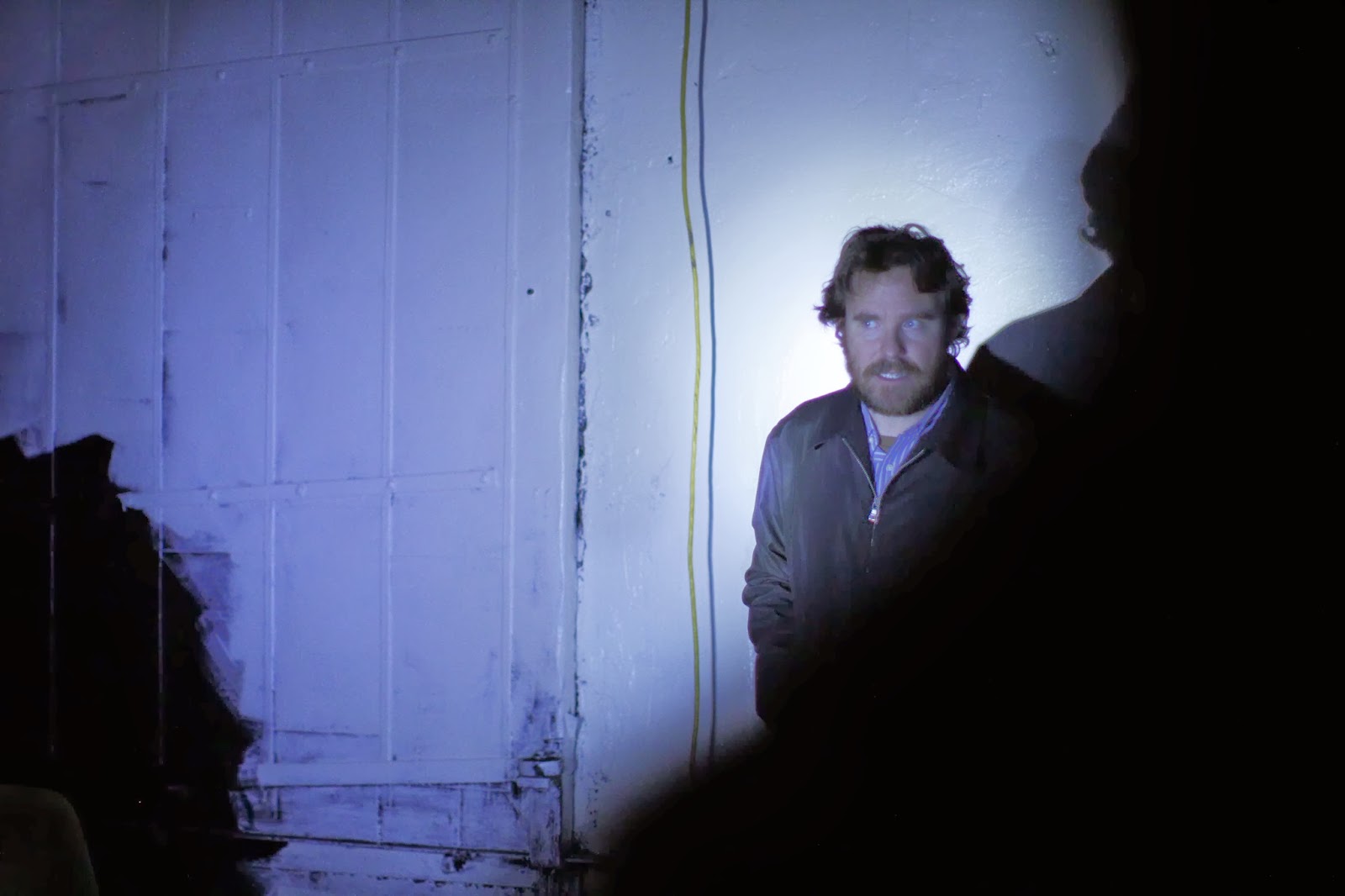
Bedlam, the Off-Broadway company remounting Hamlet in rep with a riveting Saint Joan, has a talent for finding creative solutions to staging problems. Their biggest obstacle, self-imposed, is a four-person cast that should make large-scale shows like Hamlet or Joan impossible. But the troupe stages these works without compromising the plays’ visions and with a unique method that acts as a signature and an artistic manifesto. At each intermission (they have two in Hamlet), they and stagehands rearrange the stage and house, effectively altering the stage, style, and atmosphere to suit the next act.

This device, one of many, extends the stage space into new dimensions, and also keeps the physical relationship between actor and audience in constant flux. In a sense, it’s a modernist extension of Shakespearean dramaturgy, which defined the location though word and action rather than set and props. Bedlam’s bold, unconventional style establishes their potential for greatness in the Off-Broadway scene.

The bespoke design frees the company to try radical methods, even beyond the triple- and quadruple-casting of actors. But Bedlam’s work rarely feels tricksy or cerebral, partly because they eschew technological solutions, and partly because the company’s designer (John McDermott) covers the blank space in whitewash to create an empty, rough-hewn ambiance—Bedlam’s stage isn’t a lab, it’s a workshop. The sensibility generates remarkably effective theater. Their Hamlet, for instance, has a truly unsettling ghost. The prince himself stands before the audience; a stagehand shines a powerful flashlight at his face at the back of the house; in the surrounding darkness, the trio of other actors delivers the ghost’s lines and sentences in rotation and overlap. The disembodied sound and eerie halogen light prickles our flesh and makes us doubt the ghoul’s integrity.

Polonius (Edmund Lewis) gets mocked
by everyone onstage
(photo: Elizabeth Nichols)
As long as they abandon their reverence for the play, Bedlam’s Hamlet is thoroughly engaging. So it’s unsurprising that their show’s strongest facets are the comedic ones. Edmund Lewis plays Polonius as a sort of portly C-3PO, albeit one with a fried circuit that makes him freeze at times. Another performer, Tom O’Keefe, gets several scenes of hilarity, including a cheerfully obtuse gravedigger. As Marcellus, he sounds a bit like Scooby Doo Shaggy when he delivers the “Something is rotten…” line—it makes sense, since it’s in reaction to that terrifying ghost, and it also breaks some of the orthodox solemnity.

Ironically, the more the company relies on Shakespeare’s script than on their own vision, the more unfocused the show is. Generally, their playing style draws the characters in broad, simple strokes. But in the psychological scenes, especially the setpiece speeches of Hamlet, Claudius, and Gertrude, they execute the script in deferential fashion. As Hamlet, Eric Tucker has a dashing manner and an expressive face, and he’s plays the character’s ironic self-reflection well. But aside from the nunnery speech, he never comes up with a new perspective on a scene or soliloquy. Though the general tenor is there, he lacks specificity.

So when the show drags in the middle set of acts, it’s because Bedlam mostly backs off from the showmanship. The troupe’s female member, Andrus Nichols, plays both Gertrude and Ophelia; it would’ve been more interesting—and in keeping with Bedlam’s sense of theatrical liberty—to cast one of the men. The numeric limitation in cast means that Nichols plays several men anyway, of course, and in those cases, she often plays the role as genderless. But her Guildenstern is specifically female, because she’s the focus of Hamlet’s misogyny like Ophelia and Gertrude. Perhaps the minor theme would’ve been blunted if Nichols hadn’t played those latter roles, but while her Guildenstern offers new insight into the play, it’s less bold—less Bedlam!—than cross-casting men might have been.


But even in the middle third, Bedlam’s Hamlet is the equal of any Off-Broadway Shakespeare, and its first and final thirds place the production above most. The company’s nonconformist ethos proclaim them to be an electrifying addition to the New York scene and especially to the staid collection of classical companies. I’d love to see their Winter’s Tale or let them loose on a Restoration Comedy; but whatever they stage next, I hope they’ll be inspired to attack in rough and rousing style.

---

Hamlet
Bedlam at the Culture Project
director: Eric Tucker